
The World Health Organization reports that regular physical activity helps lower the risk of heart disease, diabetes, and several long-term health conditions. While many people connect physical activity with gyms, sports, or planned exercise programs, daily movement often begins with ordinary routines. Small actions repeated throughout the day can quietly contribute to movement habits without people noticing.
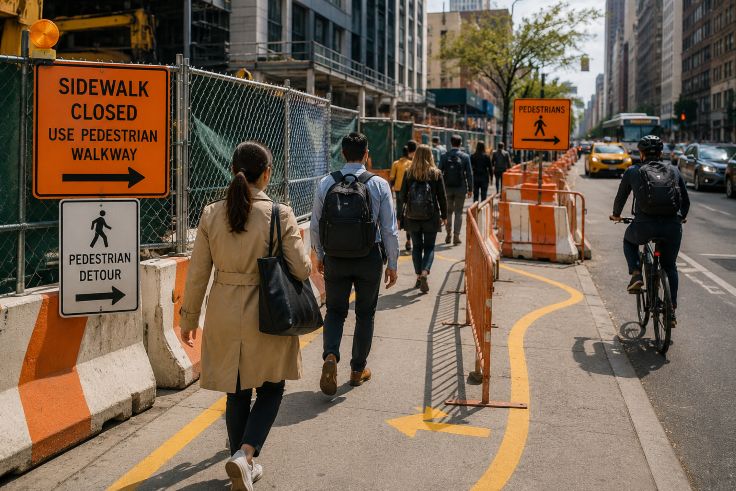
Urban spaces change constantly. Sidewalk repairs, road work, utility upgrades, and building projects can temporarily alter how people move through neighborhoods. Public pathways may shift for safety reasons, and visual guidance often becomes necessary to direct pedestrians. Information from construction signs NYC and related temporary safety systems frequently serves as a source of direction during these changes. Although their purpose centers on safety and navigation, these adjustments can create subtle effects on movement patterns and daily activity.
People tend to build routines around familiarity. The route to work, the path to a grocery store, or the walk toward a transit station often becomes automatic. Human behavior commonly follows repeated patterns because repetition reduces decision-making. Yet temporary route changes interrupt that process and introduce small behavioral shifts.
Why Temporary Walking Routes Change Daily Behavior
Routine movement depends heavily on environmental familiarity. Researchers from Harvard T.H. Chan School of Public Health note that environmental design can influence health behavior and physical activity choices. People often select paths based on convenience, visibility, and ease of movement rather than deliberate fitness goals.
When sidewalks close or pathways change, individuals frequently adjust without much thought. A person who normally walks fifty steps from a parking area to an office entrance may suddenly need to walk an additional block. Another person may begin using stairs because an elevator entrance becomes temporarily inaccessible.
These changes may seem small at first. However, movement repeated several times throughout a day can gradually create measurable differences.
Environmental cues play an important role here. Directional signs, temporary barriers, and pedestrian guides quietly influence decision-making. Most people follow visual instructions automatically because they help reduce uncertainty and improve safety.
How Contractor Signage Influences Walking Patterns
Temporary construction guidance exists mainly to keep pedestrians and workers safe. Yet its effects extend beyond safety measures. Traffic control markers and pedestrian direction systems influence how people move through an area.
Experts from the National Association of City Transportation Officials explain that temporary street and pedestrian designs can shape traffic flow and movement behavior within cities. People generally prefer routes that feel clear and predictable.
Consider a busy downtown area during road maintenance work. A blocked sidewalk may redirect foot traffic around another side of the street. People walking alone may choose wider paths, while groups may select routes that feel less crowded.
Visibility also affects behavior. Clear directional messages reduce hesitation. Poorly placed temporary markers may create confusion, causing people to stop, slow down, or backtrack.
As pedestrian traffic shifts, movement patterns throughout surrounding streets and public spaces can change as well. Cafes, bus stops, office entrances, and public gathering areas may experience different foot traffic levels during temporary projects.
Unexpected Fitness Effects of Everyday Detours
Fitness discussions often focus on planned workouts, exercise schedules, and structured training. Yet health researchers increasingly recognize the value of incidental movement.
The American Heart Association notes that movement accumulated throughout the day can contribute to overall physical activity levels. Walking extra distances, standing more frequently, and climbing stairs can become meaningful when repeated consistently.
Temporary walking routes occasionally create these opportunities without people actively seeking them.
Someone redirected around construction fencing may walk several additional minutes every day. A commuter using a different station entrance might encounter stairs rather than escalators. Office workers taking alternate building access routes may increase their daily steps without realizing it.
Micro-activity matters because daily routines often shape long-term habits more effectively than isolated actions. A thirty-minute exercise session remains valuable, but movement spread across an entire day can support activity levels in a practical way. Similar observations appear in discussions around shared movement routines and daily wellness habits, where small, repeated actions gradually become part of everyday behavior instead of feeling like structured exercise.
These small adjustments often occur quietly. People rarely think, “I exercised because of a detour.” Instead, movement becomes part of ordinary life.
Challenges Can Appear as Well
Despite possible benefits, route changes do not always encourage movement.
Longer pathways can become frustrating for individuals with limited mobility or time restrictions. Weather conditions may create additional challenges. Rain, heat, uneven surfaces, and crowded temporary walkways can reduce comfort.
Research published through the Centers for Disease Control and Prevention shows that built environments influence activity levels and accessibility. Safe surroundings often affect whether people choose walking over other transportation options.
Accessibility remains important during temporary infrastructure changes. Detours that increase walking distance for some individuals may create barriers for others.
These realities show that environmental design involves balancing multiple priorities. Safety, convenience, and accessibility all play a role.
Practical Ways to Adapt to Temporary Route Changes
People do not need major lifestyle changes to recognize movement opportunities.
Pay Attention to Routine Changes
Small route adjustments sometimes reveal hidden movement habits. A slight increase in walking distance may become part of daily activity.
Build Flexibility Into Daily Routines
Temporary pathways eventually change again. Being open to alternate routes can reduce stress while maintaining consistency.
Focus on Regular Movement
Fitness does not always begin with intense exercise sessions. Repeated activity often matters more than occasional bursts of effort.
Small Environmental Changes Can Shape Larger Habits
Daily environments quietly influence behavior in ways many people overlook. Temporary pedestrian routes, safety markers, and construction wayfinding systems exist to support movement and safety, yet they may also affect everyday routines. Simple route changes can increase walking distances, alter movement choices, and create small opportunities for activity.
Fitness habits sometimes emerge through ordinary experiences rather than planned goals. Temporary directional systems, sidewalk guidance markers, and work zone signage may seem unrelated to health discussions. Yet they can influence how people move through daily life, one step at a time.
Urban environments continue to evolve, and movement patterns evolve with them. Sometimes the smallest changes in a path can create larger changes in routine.