
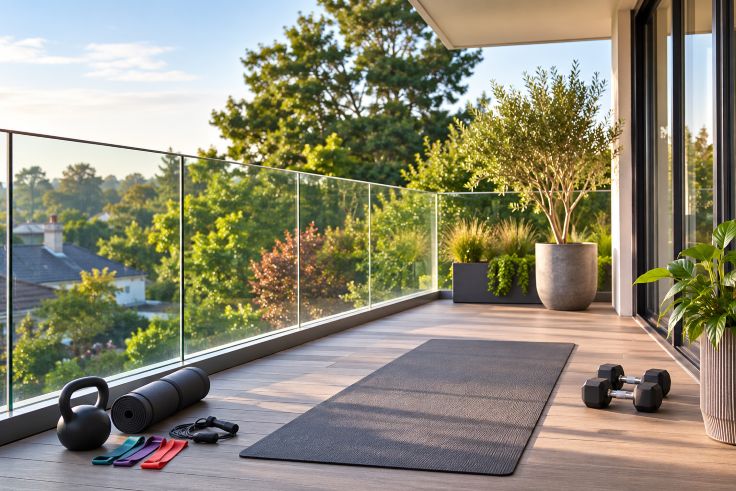
Regular physical activity supports cardiovascular health, muscle strength and general wellbeing. The World Health Organization recommends that adults complete 150 to 300 minutes of moderate aerobic activity each week, along with muscle-strengthening exercise on at least two days. A home workout area can make that target easier to approach, and the space does not have to be a conventional indoor gym.
Balconies, roof terraces and elevated decks can provide practical exercise areas when they are properly designed for movement and safety. These spaces need particular attention around open edges, especially where workouts involve repeated movement or equipment. When transparent guarding is part of the design, toughened glass for balustrades can help create a durable physical boundary while preserving the open views that make an outdoor workout area appealing.
Step 1: Decide What the Space Needs to Support
Start with the activities you actually expect to do. A yoga or stretching area has different requirements from a space intended for kettlebells, resistance training or stationary cycling. Measure the available floor area before buying equipment and consider how much room each movement requires.
The aim is to make exercise convenient rather than recreate a commercial gym outdoors. The World Health Organization notes that physical activity can include planned exercise as well as recreational and everyday movement. This leaves plenty of room for a home setup built around individual routines rather than rows of machines.
Step 2: Make the Outdoor Setting Part of the Routine
Fresh air, daylight and an outdoor view can make a terrace feel quite different from a spare-room gym. Research into green exercise also suggests that natural surroundings may influence how people experience physical activity.
A systematic review indexed by the U.S. National Library of Medicine’s PubMed examined 28 trials comparing exercise in green environments with indoor activity. Outdoor green exercise showed some evidence of greater enjoyment and more positive feelings, although the researchers stressed that the overall quality of evidence was low. More recent research has continued to find potential mental wellbeing benefits from exercising in green environments.
This does not mean a balcony overlooking trees automatically makes a workout more effective. It does suggest that pleasant surroundings can be considered when deciding where exercise feels comfortable and sustainable.
Step 3: Treat Elevated Areas Differently From Ground-Level Patios
A terrace several metres above the ground introduces risks that do not exist in a garden workout area. Exercise can involve quick changes of direction, loss of balance, swinging resistance bands or moving equipment. That makes the condition of perimeter barriers, flooring and access routes particularly important.
Before using an elevated area for regular workouts, inspect the existing guarding and the surrounding structure. Avoid placing exercise equipment where it obstructs doors, creates a trip hazard or encourages people to work too close to an exposed edge. Heavy equipment also deserves additional consideration because balconies and terraces are designed around specific structural loads. Where there is uncertainty about capacity, a qualified structural professional should assess the area before substantial equipment is added.
Step 4: Protect Clear Movement Zones
Once the perimeter has been considered, divide the available area into simple zones. One section might hold a yoga mat, another could accommodate a stationary bike, while a small storage point keeps resistance bands and lighter accessories out of walking routes.
- Keep exercise movements away from stairs and changes in floor level.
- Leave a clear route between the workout zone and the entrance.
- Store loose equipment after each session.
- Choose outdoor-suitable flooring with dependable grip.
- Keep furniture outside the main exercise area.
Simple organisation matters because a compact terrace can quickly become crowded. The wider layout deserves attention too, since boundaries, landscaping and access points can influence how comfortably people use outdoor spaces that support healthy living. A fitness area that requires furniture to be moved every time someone exercises may eventually become inconvenient, reducing one of the main advantages of having a workout space at home.
Step 5: Plan for Weather, Heat and Sun
Outdoor exercise also means responding to conditions that indoor gyms largely control. The World Health Organization advises that high temperatures can place additional strain on the body, making hydration, appropriate clothing and avoiding excessive heat important considerations during physical activity.
Shade from an awning or pergola can make an exposed terrace more practical during warmer periods. Equipment should also be selected or stored with rain and moisture in mind. After wet weather, check the floor before exercising, since water, leaves and other debris can affect footing.
Step 6: Keep the Setup Flexible
A useful outdoor fitness space does not need to become permanently dedicated to exercise. Foldable mats, compact weights and portable resistance equipment can allow a terrace to serve several purposes throughout the day.
This flexibility is particularly useful for smaller homes. A morning stretching area might return to being a seating or dining terrace later. Transparent perimeter guarding can also help maintain the visual openness of the space instead of making a relatively small elevated area feel enclosed.
From Unused Terrace to Practical Fitness Space
Home fitness works best when exercise fits naturally into everyday life. Elevated decks, balconies and terraces can provide an alternative to converting a bedroom or building a dedicated gym, particularly when the outdoor environment is pleasant and easily accessible.
Safety, however, needs to shape the project from the beginning. Suitable perimeter protection, clear movement areas, appropriate flooring, weather planning and careful equipment placement can turn an overlooked outdoor area into a more functional part of the home. With those basics addressed, an elevated space can support anything from morning mobility exercises to strength sessions while remaining useful for relaxation and other household activities.
As homes continue to serve more purposes, fitness areas do not have to follow the traditional gym model. Sometimes the better approach is to examine spaces that already exist and adapt them carefully, creating an exercise environment that is convenient, flexible and suited to the people who will actually use it.